Easter Island - Rapa Nui

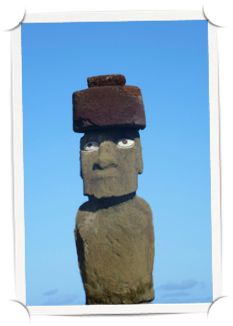
Highlights: Huge moai (statues) in a glorious setting, the remoteness itself, and the luxury of two days to enjoy it all!
What a journey! We travelled for four days from Robinson Crusoe Island. Only a half dozen ships a year come here. We anchored off the town of Hanga Roa. The tendering was a little hair raising - but the staff are so good at their job. Four people were ensuring we were safe. There was quite a swell such that at some points the tender (lifeboat) was pulled out of the water by the ropes when we were re-boarding the ship! They kept repositioning the ship to shelter the tender docking platform.
Easter Island is a volcanic island with rocky black shores but part of the island is green and lightly wooded on the levels but bare grass on the hills. It looks like the UK moors but the temperature is wrong! The island had been leased to use for sheep grazing. Not anymore, though we did see lots of wild horses and cattle wandering along the side of the road.
We visited a row of moai (statues) overlooking the anchored ship - colossal
statues standing on ahu (platforms). One had white eyes but the rest were vacant. They stare inland, not out to sea.
We visited a much larger group of moai, again looking inland. They are stunningly huge. These had been knocked down by a tidal wave but the Japanese put them up again as a gift for lending them a moai.
Then we drove to the quarry site (moai nursery) where there were many statues
partially completed - just heads or full length but not free standing, still
attached on their backs to the wall of rock.
I feel like I have not described the moai - the huge size but also the setting. They back onto the crashing surf and the very blue sky. The one statue with the eyes looks amazing!
On our second day, Richard wasn’t feeling well so I went out with my group of 10 to visit the B list of sites! Actually they were interesting, including a volcano crater that is about 200 metres deep with a lacy pattern of ponds and grass. On the slopes wild fruit
grows. On corner is almost open to the sea. In another millennia the gap will
open.
We visited another national park site where you can see the island which is the
focus of a swim contest. From around 1760 to 1878, the man who swims to the island and retrieves an egg from a bird's nest is the bird man (highest status person) for a year. We saw rock houses with grassed roofs where the young contenders spent a few days waiting for the right tide conditions.
We also visited an area where the little "hats" for the moai were quarried. They are a different stone - a reddish volcanic rock. And an area with ahu (platforms) from two different eras as well as a group of moai which were facing the sea. These, called the explorers, face Polynesia.
A memorable place!